Dissecting the characteristics of konjac and its appeal as a traditional Japanese food ingredient!
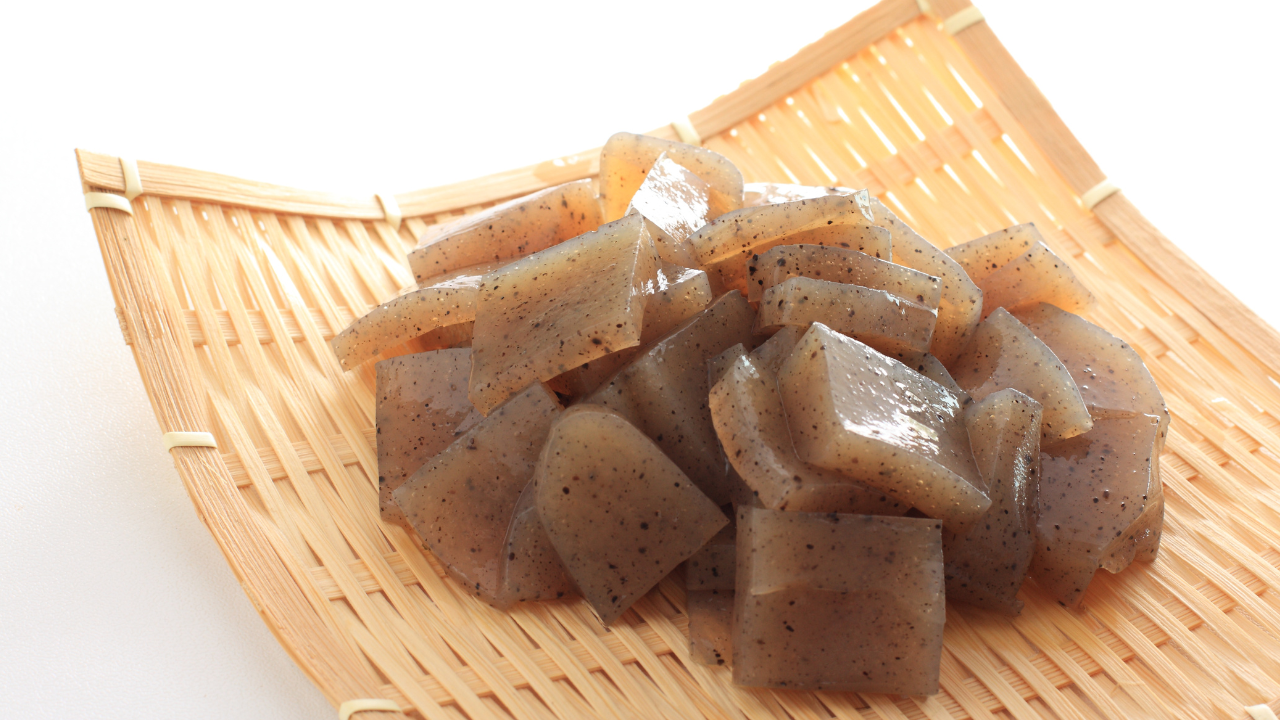
table of contents
What is konjac?
Konjac is a traditional Japanese food made from the konjac yam, a member of the Araceae family. It is made by adding calcium hydroxide to a sugar called mannan extracted from the corm (konjac ball) of the konjac yam and solidifying it. Konjac yam is native to India and Ceylon, but konjac itself is known as a food unique to Japan
Types of konjac
There are many different types of konjac. Typical konjac sheets are solidified into a box shape, with peeled konjac balls being white konjac and those with the skin on being black konjac. There is also sashimi konjac, which is eaten raw, and many variations colored with ingredients such as green laver or carrots. There is also ball konjac, which is solidified into bite-sized balls, and thinly sliced konjac threads
The nutritional value of konjac
Konjac is a rich source of fiber, and its main component, mannan, is difficult to digest and absorb, so it has almost no calories. It is a suitable food for dieters and health-conscious people
Recommended recipes using konjac
Recipes using konjac
Konjac Dengaku
Ingredients (serves 4)
- Konjac: 1 piece
- Dengaku miso: 40g red miso, 60g Saikyo miso
- Sugar: 1 tablespoon
- Mirin: 2 tablespoons
- Dashi: Half a cup
- Poppy seeds: a little
How to make it
- Sprinkle a little salt on the konnyaku, knead it, pound it lightly with a rolling pin, and rinse it with water. Cut it into 1cm thick pieces, boil it in boiling water for 3-4 minutes, and drain
- Put the ingredients for Dengaku miso into a small saucepan and simmer over low heat until thickened
- Spread the dengaku miso on the konjac and sprinkle with poppy seeds to finish
Konjac and vegetable stir fry
Ingredients (serves 4)
- Konjac: 1 piece
- 1 red bell pepper
- Chinese chives: appropriate amount
- Oyster sauce: 1 tablespoon
- Soy sauce, sake, salad oil, salt
How to make it
- Cut the konjac into 4cm batons, boil in hot water and drain. Cut the bell peppers and chives into bite-sized pieces
- Put soy sauce, sake, water, and oyster sauce in a pot, add the konjac, and bring to a boil
- Heat oil in a wok and stir fry the chives and bell peppers. Season with seasonings, add the konjac and stir fry
summary
Konjac is characterized by its low calorie content and satisfying texture. It is a versatile ingredient that can be used in a wide range of dishes, from traditional Japanese cuisine to modern adaptations, and its benefits can be maximized by incorporating it into a healthy diet. Try using different types of konjac to add variety to your daily meals
Introducing special recipes using konjac


Related Articles
What is the appeal of Mitsuba? We also introduce recipes that make use of their features!
What are the charms of turnips and what are their special recipes? Enjoy Japanese vegetables in season in winter!
Explaining the history, nutrition, and appeal of pumpkins!
Enjoy the taste of autumn! 5 recipes packed with mushrooms

Don't let the flavor of the meat go away! Tips for making juicy hamburger