How to Choose and Recipes for Enjoying Seasonal Bonito: From Delicious Seared Bonito to Autumn Sashimi
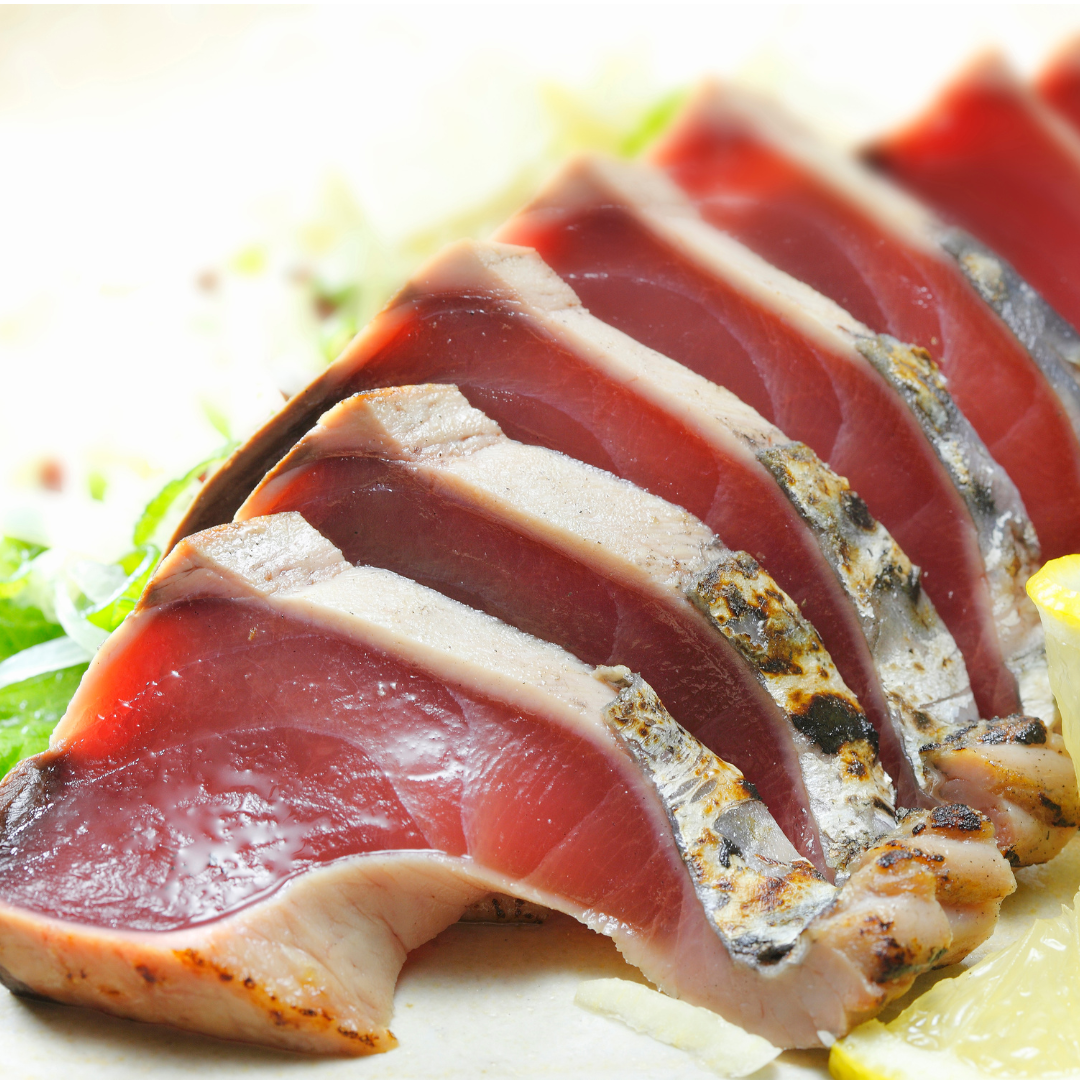
Bonito is a migratory fish that travels north on the Kuroshio Current from Kyushu to southern Hokkaido from spring to summer, and then heads south around September. It is in season from spring to early summer, but the fatty bonito caught in late autumn is also exceptionally delicious
table of contents
How to choose bonito
- When buying a single fish: Look for fish with a firm, taut belly, a silvery-white sheen, and clearly defined stripes for a good quality fish.
- When purchasing by the section: Choose those with bright red, glossy flesh.
Bonito is rich in iron, with the iron content concentrated especially in the dark parts of the fish
How to eat bonito
- Bonito in early summer: Characterized by its refreshing taste, it is ideal for tataki (seared bonito).
- Autumn bonito: Because it's fatty, sashimi is highly recommended. It can also be enjoyed in various other ways, such as simmered dishes, ginger-braised bloodline, and a pureed soup made with the scraped meat.
Preparing Seared Bonito
The preparation steps for making bonito tataki are as follows
- Preparation: Prepare two fillets of bonito and place them skin-side down on a cutting board.
- Skewering: First, insert a metal skewer into the center of the bonito, then cross the skewers in front of you to form a fan shape and insert them on both sides.
- Grilling: When grilling, firmly hold the pivot point of the metal skewer and hold it over the flame skin-side down until the surface turns white. Grill the flesh side in the same way.
- Cooling: As soon as it's done baking, immerse it in ice water to cool, then twist and remove the skewer.
By following these steps, you can make bonito tataki and enjoy its unique flavor to the fullest. Bonito holds an important place in Japanese food culture, and its flavor changes with the seasons
Introducing recommended recipes using bonito
Bonito is a fish that occupies an important position in Japanese cuisine, and there are many different ways to prepare and eat it. Here are four recipes to introduce: Bonito Salad with Chinese Dressing, Simmered Bonito with Ginger, Sashimi-Style Seared Bonito, and Simmered Bonito with Burdock Root
Bonito salad with Chinese dressing
This recipe uses refreshing bonito sashimi, seasoned with colorful vegetables and a special Chinese dressing
- Preparation: Slice the bonito into 4-5mm thick pieces, and julienne the cucumber, carrot, celery, and bell pepper.
- Preparing the wontons: Deep-fry the wonton wrappers and then roughly crush them.
- Plating: Place the bonito in a bowl, and arrange the vegetables, green onions, wonton wrappers, and sesame seeds attractively on top. Pour the dressing over the dish just before serving and mix well.
Bonito simmered in ginger
Ginger simmered in soy sauce is a dish that combines the rich flavor of bonito with the tangy taste of ginger
- Preparing the bonito: Remove the bloodline bones from the bonito and cut it into 2cm cubes.
- Simmering: Bring the bonito to a boil with the seasonings, add the ginger and simmer until reduced.
- Finishing touches: Once the sauce has reduced, add the corn syrup and mix well. Serve in a bowl.
Sashimi-style seared bonito
The tataki is made by combining bonito sashimi with refreshing grated daikon radish, which brings out its fresh flavor
- Preparing the tataki: Sear the bonito, pat it dry, and cut it into 1cm thick slices.
- Preparing the grated daikon radish: Divide the grated daikon radish into two portions, and mix ginger and garlic into each portion.
- Plating: Wrap the bonito in a perilla leaf, place grated daikon radish in between, and arrange on a plate.
Simmered dried bonito flakes and burdock root
The simmered dried fish and burdock root dish allows you to enjoy the traditional flavors of Japanese cuisine
- Preparation: Break the dried bonito into large pieces, and cut the burdock root into 5cm lengths and boil.
- Simmering: Put the seasonings, burdock root, and ginger in a pot and heat it, then add the dried bonito flakes and simmer.
These recipes offer great ways to enjoy the many different flavors of bonito, allowing you to savor its diverse tastes and textures and experience the depth of Japanese culinary culture
We also introduce special recipes for epi recipes

Related Articles
Rediscover the charm of ham! Enjoy the world of ham with a variety of recipes
The charm of abalone and the best recipes: Explaining everything from how to choose it to recommended ways to eat it!
Enjoy the taste of autumn! 5 recipes packed with mushrooms
Seasonal and how to enjoy clams: We introduce delicious recipes, from grilled clams to clam chowder!
Basics and recommended recipes for soy milk: Make your health and deliciousness easier