Starting with pickled bran to early summer! Introducing easy ways to start fermented foods and recommended containers!
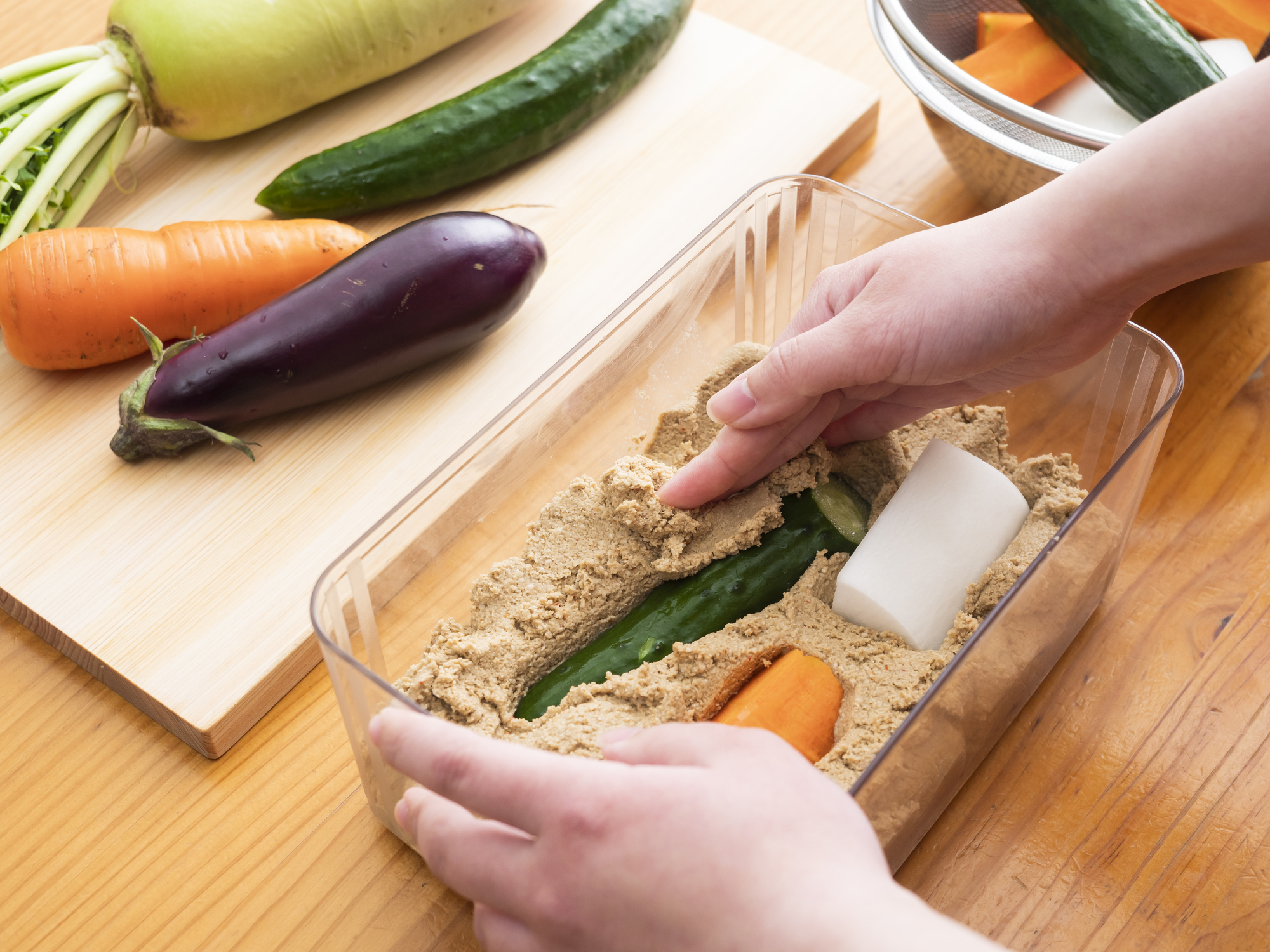
table of contents
- 1 Welcome to the deep world of pickled vegetables
- 2 Tracing the history of rice bran pickles
- 3 What is a rice bran bed? Basic mechanism
- 4 Basic steps to enjoy pickled vegetables at home
- 5 How to enjoy pickled vegetables: from the classics to the unusual
- 6 Commercially available rice bran is also convenient
- 7 How to Choose the Best Storage Container for Making Pickled Vegetables in Rice Bran
- 8 3 Recommended Rice Bran Pickle Containers
- 8.1 1. Enameled pickle container for refrigerators with a sealable lid and water drainer [Enameled pickle container, square, storage container]
- 8.2 2. Nodahoro Enamel Pickle Container, Rectangular, 3.2L, with Water Drainer, White Series, "Nukazuke Bijin" (Pickled Rice Beauty), Made in Japan, TK-32
- 8.3 3. Yamazaki (Yamazaki) Airtight Pickling Case with Water Drainer, White, Approx. W28 x D16.5 x H12.2cm, Tower 4944
- 9 Frequently Asked Questions Q&A
- 10 Summary: Start your own pickled rice bran life
Welcome to the deep world of pickled vegetables
Japan has a wide variety of pickling cultures, but one of the most fascinating is "nukazuke." A beloved home-style dish passed down since ancient times, in recent years many commercially available nukadoko beds have become readily available for easy enjoyment. Pickles are often thought of as a simple food culture that simply involves pickling vegetables, but in fact, it is deeply connected to the natural process of fermentation. It requires a little bit of effort, but the appeal of nukazuke is that you can cultivate the flavor to your liking. In this article, we will take a closer look at this profound nukazuke and nukadoko culture
This article covers everything from the history and characteristics of nukazuke, how nukadoko works and how to make it, to a variety of interesting ingredients that can be pickled, how to easily get started using commercially available nukadoko, and an introduction to nukazuke containers that are easy to store in the refrigerator. Why not start your own nukazuke life while fully enjoying the unique flavor born from the power of fermentation?
Tracing the history of rice bran pickles
Pickling culture has been loved by the Japanese since ancient times
It is said that Japan has had a culture of preserving vegetables in salt since the Yayoi period. Salting, which was essential for preserving vegetables for a long time, was valued as a way to make up for vegetable shortages during the winter. Over time, people began to make fermented pickles using not only salt but also miso, koji, and rice bran, and unique pickling cultures began to flourish in various regions
Even today, there are many unique pickles made all over the country, but among them, "nukazuke" stands out for its fascinating flavor, which changes depending on the fermentation process and the way the person who pickles them takes care of them. Some rice bran beds are passed down from generation to generation in each household, and each region has its own ingredients and methods, resulting in subtle variations
Pickled vegetables in rice bran, which are said to have become popular during the Edo period
The Edo period is often cited as the time when nukazuke became popular throughout the country. With the development of distribution, more people were able to eat polished white rice, and one theory is that nukazuke became more established as a way to reuse the rice bran that was generated. It was also a time when pickling culture itself flourished among the samurai and townspeople, and nukazuke, which was cheap and easy to make, was a valuable side dish that supported the kitchens of ordinary people and was a valuable addition to their meals
Even today, pickled vegetables in rice bran, which can be enjoyed for its unique flavor, are highly popular as a "Japanese home-style fermented food." Although it takes time and effort, the joy of being able to adjust the finished product to your liking is what keeps it so popular
What is a rice bran bed? Basic mechanism
"Toko" is made by combining rice bran, salt, and water
The rice bran that remains after rice is polished is rich in various plant-derived components. When salt and water are added to this and stirred, the "bran bed" is made. However, vegetables are not pickled immediately from the beginning. First, "discarded vegetables" are pickled to encourage fermentation until the rice bran has matured sufficiently to serve as a pickling bed
By stirring and cultivating this mixture daily, a unique aroma, sourness, and richness are developed, imparting a deep flavor to vegetables when pickled in it. In other words, the bran bed can be thought of as a "fermentation plant that creates the flavor you like." The key is to maintain it daily and mix the bran at the top and bottom thoroughly to adjust the fermentation conditions, which change depending on the environment, such as the air, temperature, and humidity
The aroma and unique sourness of fermentation
One of the attractions of Japanese fermented foods such as pickles, miso, and soy sauce is the unique aroma that is born during the fermentation process. In the case of nukazuke, in addition to the original fragrant flavor derived from rice bran, as the fermentation process progresses the acidity increases and a complex aroma is born. Some people may not like it, but once you get used to it, many people find that this aroma is the irresistible "true charm of nukazuke."
The taste also changes subtly depending on the type of vegetables pickled, the pickling time, seasonal temperature changes, etc. One of the great attractions of managing your rice bran bed is being able to enjoy these "different expressions from day to day."
Basic steps to enjoy pickled vegetables at home
1. Make the rice bran
First, prepare rice bran, salt, and water. If you use commercially available rice bran, there are roasted and raw types, but you can choose based on your preference and what is readily available. For salt, coarse salt with larger grains is often preferred
Guidelines for making rice bran
- Rice bran...1kg
- Salt: About 10% to 15% of the weight of the rice bran
- Water: Add a little at a time while checking the condition of the rice bran
- (You can also add flavoring ingredients such as kelp or chili peppers to your liking.)
Place these ingredients in a container and stir until it thickens to the consistency of miso. Add the vegetables you want to discard (such as outer cabbage leaves or radish scraps) and continue fermenting for about 1-2 weeks, stirring once or twice a day. The vegetables at this stage are called "sutezuke" (pickled vegetables) and are used to adjust the flavor, so they should be disposed of without eating
2. Pickle the vegetables you want to eat
Once the bran bed has settled, it's time to start pickling the vegetables. Standard vegetables such as cucumbers, radishes, carrots, eggplants, and turnips are all suitable for bran pickling, as are zucchini, peppers, myoga ginger, and celery. The recommended pickling time varies depending on the vegetable, but a few hours is recommended for short pickles, and about a day is recommended for longer pickles
When pickling, lightly wipe off the moisture from the vegetables first to prevent the rice bran bed from becoming too watery. Once pickling is finished, thoroughly remove the bran from the vegetables and slice them to complete your rice bran pickles, which have a refreshing acidity and aroma
3. Daily care
It is said that the bed is the lifeblood of bran pickles, so the condition of the bran bed is crucial. After pickling the vegetables, be sure to stir the whole mixture well, roughly once a day, to allow air to reach the bottom. If the bran bed becomes too soft, you can adjust it by adding a small amount of new rice bran or salt
Fermentation tends to progress more quickly in the hot summer months, so placing it in the refrigerator to stabilize the temperature will help the flavor settle. On the other hand, in colder months, you can enjoy gentle fermentation even at room temperature, so you may want to leave it at room temperature. Please take care of it in a way that suits your own lifestyle and kitchen environment
How to enjoy pickled vegetables: from the classics to the unusual
When it comes to pickled vegetables, cucumbers and radishes are the most popular, but in fact, a variety of ingredients go well with it. Here are some examples:
| ingredients | point | Estimated pickling time |
|---|---|---|
| Cucumber | Rub off the thorns on the surface with salt | 3 hours to half a day |
| Japanese white radish | Cut lengthwise or slice into rounds and pickle | About half a day to 1 day |
| Carrots | Cutting them lengthwise makes them easier to pickle | About half a day to 1 day |
| Eggplant | Remove the stem and wash the surface with salt | 5 hours to 1 day |
| turnip | If you are pickling them whole, shallow pickling is best | About half a day to 1 day |
| Myoga | Cut it in half to bring out the aroma | 1 to 2 days |
| paprika | Remove seeds and cut in half | About half a day to 1 day |
| celery | Remove the sinews thinly and pickle | About half a day to 1 day |
| zucchini | It is easier to pickle if you slice it into rounds or lengthwise | About half a day to 1 day |
| avocado | If you use something firm, it will taste like cheese | About half a day to 1 day |
| Boiled eggs | Let cool completely and then soak | About half a day to 1 day |
Looking at it this way, the interesting thing about bran pickles is that you can pickle a variety of foods other than vegetables, such as eggs and tofu. Each one has a unique flavor and texture, so be sure to try out a variety of them
Commercially available rice bran is also convenient
Although pickling in rice bran is appealing, many people may be worried that "stirring every day seems like a lot of work" or "the process of discarding the pickles seems difficult." For those people, we recommend using a commercially available rice bran bed that is already in a fermented state
They are sold in various forms, such as bags or containers, but basically, you can easily make nukazuke by simply adding vegetables and leaving them for a few hours. Some products even advertise that "no mixing is necessary," making them a great place for beginners to start. First, try testing the taste with a commercially available nukadoko, and once you get used to it, try making your own from scratch, and you'll be able to fully enjoy the nukazuke lifestyle
How to Choose the Best Storage Container for Making Pickled Vegetables in Rice Bran
When it comes to caring for your rice bran starter every day, you want a container that's easy to use and keeps clean. Whether or not you can store it in the refrigerator is a particularly important point. In recent years, many homes have limited kitchen space, so compact, rectangular or rectangular containers that fit in the refrigerator are becoming increasingly popular
There are several types of container materials, including plastic, enamel, and enameled stainless steel. Below are some of the most commonly cited advantages and disadvantages
| Container material | merit | Disadvantages |
|---|---|---|
| plastic | Lightweight and easy to handle. Hard to break. Reasonably priced | May easily transfer odors |
| enamel | Hygienic and odor-resistant. Stylish appearance | Heavy. Easily chipped when subjected to impact |
| Stainless steel (including enamel finish) | If it is acid-resistant, it can be used for a long time | Sizes are limited for some products |
When choosing, checking things like whether it fits in the refrigerator, how airtight the lid is, and whether it has a water drainer will make managing it much easier in the future
3 Recommended Rice Bran Pickle Containers
Here we introduce three popular containers that are ideal for storing food in the refrigerator. All of them have tightly closing lids, which helps prevent odors from escaping inside the refrigerator. The product manufacturer's name is listed in the shortcode
1. Enameled pickle container for refrigerators with a sealable lid and water drainer [Enameled pickle container, square, storage container]
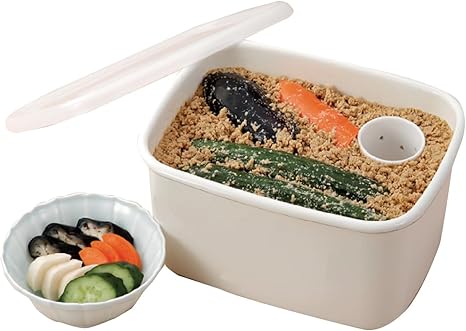
2. Nodahoro Enamel Pickle Container, Rectangular, 3.2L, with Water Drainer, White Series, "Nukazuke Bijin" (Pickled Rice Beauty), Made in Japan, TK-32
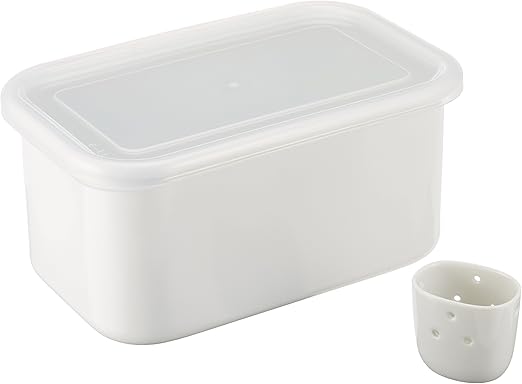
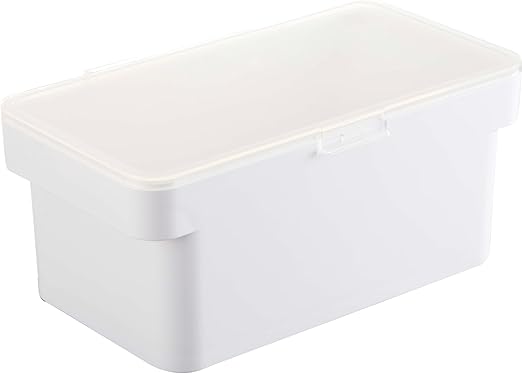
3. Yamazaki (Yamazaki) Airtight Pickling Case with Water Drainer, White, Approx. W28 x D16.5 x H12.2cm, Tower 4944
Frequently Asked Questions Q&A
Q1. What if the pickles become too sour?
If fermentation progresses too quickly, the rice will tend to become too sour. To counter this, you can slow down the fermentation rate by storing it in the refrigerator, or discard some of the old rice bran bed and add new rice bran. Also, if there is not enough salt, the fermentation balance can easily become unbalanced, so try tasting it and adjusting the salt content accordingly
Q2. It's difficult to mix every day, what should I do?
Fermentation slows down if you keep it in the refrigerator, so some people mix it once every few days unless it's midsummer. However, if you leave it for too long, an unwanted smell may develop on the surface, so it's best to mix it from the bottom every 2-3 days if possible. Storing it in the refrigerator is a great help when you're busy
Q3. The vegetables have released moisture and the rice bran bed has become loose. What should I do?
First, move a part of the bran bed aside and lightly absorb the moisture with kitchen paper. If it is too watery, add a small amount of rice bran or salt to adjust the consistency. It is convenient to use a container with a special "water remover" as it makes it easy to separate the moisture
Q4. Does the pickling method change between spring and summer and autumn and winter?
Fermentation is more active in the warm spring and summer, making it easier to infuse flavor in a short amount of time. On the other hand, in autumn and winter, pickling tends to take longer. The joy of pickling rice bran is not in the fact that one is better than the other, but rather enjoying the changing flavors that come with the seasons. Make good use of the refrigerator and room temperature management to find the pickling temperature that suits your taste
Summary: Start your own pickled rice bran life
Unlike simply pickling vegetables in salt, pickling rice bran involves a fermentation process that allows the unique flavor and aroma to develop. The flavor changes as you mix and care for the pickles every day, so it can feel like you're raising a living thing
Of course, it takes time and effort, but if you use a commercially available bran bed, you can skip the initial preparation and start pickling right away, and it's also easier to manage if you use a special container that fits neatly in the refrigerator. It's fun to try out more unusual vegetables like peppers, avocados, and boiled eggs, as well as standard vegetables like cucumbers and radishes. Enjoy the bran pickling life with your own imagination, incorporating your family's preferences and seasonal ingredients
Incorporating fermented foods that have been passed down for many years into your own style. This act itself can be a rich experience of experiencing a little bit of "Japanese living." Why not jump into the world of pickled vegetables today? Every time you bring them to the dinner table, you'll be surprised by the freshness and enjoyment of deliciousness



Related Articles

Introducing roasted pork made with pork shoulder loin!
Introducing Chikuzenni recipes using spring root vegetables!
How to eat Oka Hijiki: How to enjoy deliciousness and health
Soramame season, how to choose, and delicious recommended recipes
Introducing "hoto," a dish you'll want to eat during the chilly autumn and winter!