When will the 2025 harvest of rice be available? We'll introduce you to everything from the latest rice news to autumn clay pot rice!
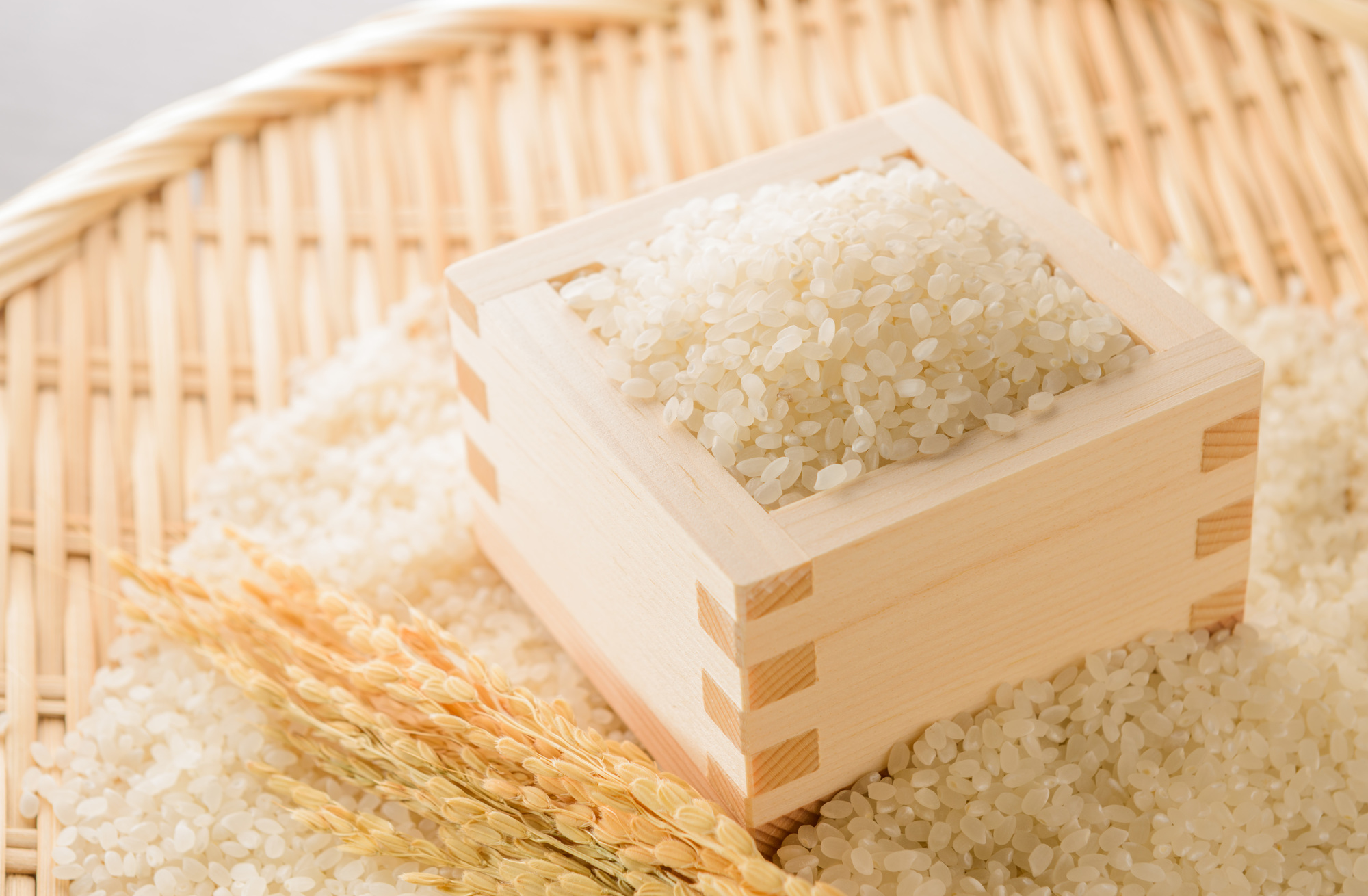
Having experienced the "Reiwa rice riots" of 2024, we are curious as to when the new rice harvest of 2025 will be available on the market. Many people are probably eagerly awaiting the new rice harvest that will be gradually released across the country.
In this article, we will cover topics related to new rice, from the distribution period for new rice by region, to Niiname-sai, Japan's traditional harvest thanksgiving festival, and how to cook rice in a clay pot to enjoy it at its most delicious.
table of contents
The definition of new rice and its difference from old rice
Legal Novice Standards
To properly understand what shinmai is, let's first check the legal definition. According to the food labeling standards of the Food Labeling Act, only products that meet the following conditions can be labeled "shinmai."
- Brown rice that has been containerized or packaged by December 31st of the year in which the raw brown rice was produced
- Polished rice that has been polished and placed in a container or package by December 31st of the year in which the raw brown rice was produced
This means that even if rice is from the 2025 harvest, if it is milled and packaged after January 1, 2026, it cannot be labeled as "new rice." This strict standard ensures that consumers can be sure they are purchasing fresh rice harvested that year.
The difference in taste between new rice and old rice
The greatest appeal of new rice is, without a doubt, its different taste. Since new rice has just been harvested, it contains a lot of moisture, and when cooked it is plump, fragrant, and sticky. You can fully enjoy the rice's natural sweetness and flavor, and this is the moment when many people realize that "new rice is different after all."
On the other hand, old rice loses moisture over time, the grains become slightly harder, and the aroma weakens. As a result, the cooked rice has a light, airy texture and a simple taste. Old rice has its own unique merits, but if you are looking for the plumpness and rich aroma unique to new rice, it is still recommended to purchase it during the new rice season.
Distribution start date of 2025 new rice harvest by region
Kyushu and Okinawa: Enjoy early-season rice in midsummer
Kyushu and Okinawa are the regions where the new rice season arrives earliest in Japan. In these regions blessed with a warm climate, the harvest of early-season rice (early varieties) begins in late July, and the new rice for the year begins to appear in markets from early to mid-August.
Some of the most well-known brands are "Yumetsukushi" from Fukuoka Prefecture, "Sagabiyori" from Saga Prefecture, "Mori no Kuma-san" from Kumamoto Prefecture, and "Tsuyahime" from Oita Prefecture. These new rice varieties begin to be sold by mid-August, allowing you to enjoy the flavor of new rice even in the middle of summer. In Okinawa Prefecture, new rice may be available even earlier, in late July.
If 2025 is anything like an average year, we can expect to see new Kyushu rice on the shelves of supermarkets and rice stores around the time of the Obon festival in August. Tasting new rice in the hot summer is exceptional, and it will surely revive your appetite if you're feeling a bit fatigued from the heat of summer.
Chugoku, Shikoku, and Kinki regions: A taste of early autumn
Following Kyushu, the next regions to see new rice available are the Chugoku, Shikoku, and Kinki regions. Harvesting in these regions takes place from late August to mid-September, and distribution of new rice begins in earnest from late August.
In the Kinki region, representative brands include "Mizukagami" from Shiga Prefecture, "Koshihikari" from Hyogo Prefecture, and "Kinuhikari" from Kyoto Prefecture. Shiga Prefecture in particular is known as a producer of high-quality rice, blessed by Lake Biwa, and high-quality new rice hits the market in early September.
In the Chugoku region, varieties such as "Akita Komachi" from Okayama Prefecture and "Koi no Yokan" from Hiroshima Prefecture, and in the Shikoku region, "Matsuyama Mitsui" from Ehime Prefecture and "Oidemai" from Kagawa Prefecture are sold as new rice from early to mid-September.
Kanto and Koshinetsu Region: With the arrival of autumn
In the Kanto region, some areas cultivate relatively early varieties, and the new rice season occurs in the middle of the national average. In Ibaraki and Chiba prefectures, rice harvesting begins in late August, and new rice begins to appear in stores from early to mid-September.
Each prefecture in the Kanto region also produces its own unique brand of rice, such as "Goropikari" in Gunma Prefecture, "Tochigi no Hoshi" in Tochigi Prefecture, and "Irodori no Kizuna" in Saitama Prefecture.
Niigata Prefecture is particularly noteworthy in the Koshinetsu region. As Japan's number one rice-producing region, Niigata boasts the highest yield in the country. Harvesting and shipping begins in earnest from mid-September, and by the end of September, large quantities of Niigata-grown Koshihikari rice hit the market.
The particularly famous Koshihikari rice from Uonuma begins harvesting in early September in some areas, with the peak harvest occurring in late September. Grown in the harsh temperature differences of the snowy country, the new Koshihikari rice from Uonuma has a supreme taste that many rice lovers wait a whole year to enjoy.
Nagano Prefecture's "Kaze Sayaka" and Yamanashi Prefecture's "Fuji no Kagayaki" varieties will also be available in stores as new rice in early October.
Tohoku and Hokkaido regions: peak harvest season
In the Tohoku region, new rice typically hits the market between late September and mid-October. While the harvest season differs slightly between the Pacific Ocean side and the Sea of Japan side, and between the plains and mountainous areas, the first shipments generally begin in late September and peak in early October.
The Tohoku region is home to many excellent brand-name rice varieties, including Akita Prefecture's "Akita Komachi," Yamagata Prefecture's "Tsuyahime," Miyagi Prefecture's "Hitomebore," Aomori Prefecture's "Masshigura," Iwate Prefecture's "Hitomebore," and Fukushima Prefecture's "Amanotsubu." News of the first shipments of these new rice can be heard in various regions every year from late September to early October.
Hokkaido is one of the leading rice-producing regions in Japan, but because of its cold climate, the growing season is short and the harvest is the latest in the country.Rice varieties grown in Hokkaido, such as "Yumepirika," "Nanatsuboshi," "Oborozuki," and "Kitakurin," are harvested from mid to late September, and the new rice usually begins to be sold in stores from early October.
Hokkaido's new rice goes on sale in early October and is said to be available in supermarkets across the country by mid-October. If you want to enjoy new rice from Tohoku and Hokkaido in 2025, early October or later will be a good time to start.
*The estimated time is only a guideline.
Niiname-sai Festival
The history of the Niiname-sai festival
When discussing the topic of new rice, it is essential to mention the ancient Japanese Niiname-sai (Niiname-sai/Shinjo-sai). Niiname-sai is an important ritual in which newly harvested grain is offered to the gods, gratitude is given for its blessings, and prayers are offered for the peace of the nation and the prosperity of its people.
This ritual has ancient origins and is described in the Nihon Shoki, and is said to have already become an established imperial court event by the Asuka period. For ancient Japanese people, rice was not just food, but a blessing from the gods, and giving thanks for the year's harvest was one of the most important religious ceremonies.
Nowadays, it is held every year on November 23rd at the Imperial Palace and at shrines all over Japan. At the Imperial Palace, the Emperor offers new grain he has grown himself, and his parents also eat the grain. It is thought that the reason harvest thanksgiving ceremonies are held at this time is because the Omi-sai festival was held at the same time as the end of harvests all over the country.
The meaning of Niiname-sai in modern times
In our modern lives, Niiname-sai is familiar as a day of thanksgiving for work, but we must not forget its original meaning of giving thanks for the harvest. Now that we have experienced a rice shortage, when we get our hands on new rice, we want the whole family to enjoy its delicious flavor and remember to be grateful to the farmers. Spending time together as a family around new rice during Niiname-sai could be said to be a new form of Niiname-sai in modern times.
Relationship with the Kanname Festival at Ise Shrine
At Ise Grand Shrine, the Kanname-sai festival is held in October, during which the new grain of the year is offered to Amaterasu Omikami. Because new grain is offered at the Kanname-sai festival, the Niiname-sai festival was not originally held at the shrine, but it is said to have begun in 1872 when an imperial envoy was sent to the shrine.
At the Kanname-sai festival, the first harvest of the year, including newly harvested rice, is offered to Amaterasu Omikami from all over the country.
Enjoying new rice in a clay pot
To bring out the best flavor of newly harvested rice, it is best to cook it in a clay pot. Clay pots use far-infrared rays to transmit heat evenly to the core of the rice, resulting in fluffy rice. Furthermore, clay pots' unique heat retention properties allow the rice to retain its heat even after cooking, slowly bringing out the rice's sweetness and flavor.
You can also enjoy the burnt rice that only a clay pot can produce, something you can't get with an electric rice cooker.
Points to consider when choosing a clay pot
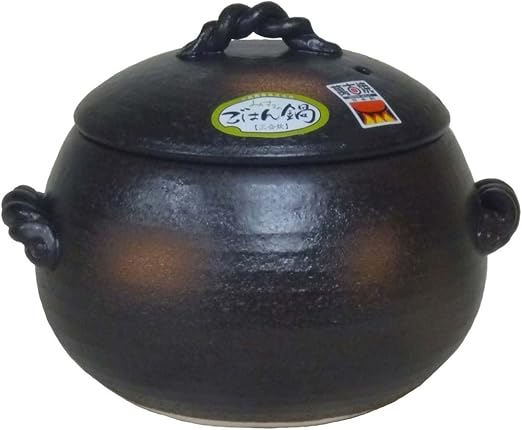
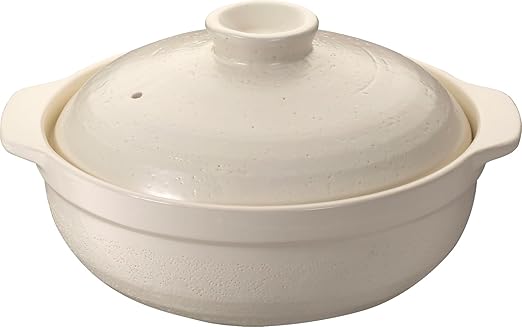
When starting to cook rice in a donabe, it is important to first choose the right donabe. There are donabe specifically designed for cooking rice, but a regular donabe can also cook rice deliciously.
Choose the size based on the number of people in your family. A size 6 is recommended for a family of 1-2 people, and a size 8 is recommended for a family of 3-4 people. The thicker and heavier the donabe, the better it retains heat and the more delicious the rice will be.
How to cook rice in a clay pot: Basics
Preparation stage
First, measure the rice accurately. Newly harvested rice contains more water than older rice, so the amount of water used is important. The standard is about 180ml of water per 1 gou (1 cup), but the trick is to use about 10-20ml less for newly harvested rice.
Gently wash the rice in cold water, repeating this process 3-4 times until the rice is clear. Newly harvested rice has soft grains, so wash it by gently mixing it with your palms without scrubbing too hard.
Immersion time
Transfer the washed rice to a clay pot and add the measured amount of water. For new rice, soaking for about 30 minutes is sufficient. Be careful not to soak the rice for too long, as this can actually damage the texture.
As a guideline, soak the product at room temperature for 30 minutes in summer and for a little longer, about 40 minutes in winter.
Cooking procedure
- Start heating over high heat : Place the donabe over high heat, cover it, and begin heating. Turn the pot occasionally to heat it evenly.
- Check that it is boiling : It will boil in about 5 to 8 minutes, and steam will come out vigorously from the gap in the lid. At this point, reduce the heat to medium.
- Cooking on medium heat : Cook on medium heat for 10 to 12 minutes. Do not open the lid during this time. It is important to maintain a constant pressure and temperature inside the pot.
- Steaming : Turn off the heat and let it steam for 15 to 20 minutes. This steaming time is the key to achieving a fluffy finish.
Completion and points
Once the steaming time is over, open the lid and stir lightly with a rice paddle. You should see a delicious crust on the bottom of the pot. You can enjoy the sweet aroma and fluffy texture unique to new rice.
summary
So, this time, I chose to talk about new rice. With the recent rice shortage and the unstable situation of supply returning and then falling short again, this was an opportunity to reaffirm the preciousness of rice, something we have taken for granted until now.
If you get your hands on some new rice, I recommend trying it in the ways we've introduced here to get a taste of autumn.

Related Articles
New Year's Day: Making the start of the year special
Introducing oyster dishes you'll want to eat during the cold winter!

[Characteristics of rape flowers and how to preserve and arrange them] Get ahead of spring! Introducing rape flowers that allow you to enjoy the whole season
What are the charms of turnips and what are their special recipes? Enjoy Japanese vegetables in season in winter!
Recipes that will enjoy the charm of Fuki and the taste of spring