New Year's Day: Making the start of the year special
"New Year's Day," welcoming the new year, is one of the most important traditional events of the year for Japanese people. There are many ways to enjoy the holiday, from going to the first shrine visit of the year, to eating osechi cuisine, to lining up at the first sales of the year for lucky bags, to children looking forward to receiving New Year's money. However, what is surprisingly little known is the origin and history of New Year's itself, and the correct way to spend it
This time, we will introduce when New Year's began, how long it lasts, and what ways of spending it are considered auspicious
table of contents
- 1 Unraveling the origins and history of New Year's
- 2 How long does New Year's last? Find out about the Matsunouchi period
- 3 Traditional ways to spend New Year's, such as visiting shrines and writing calligraphy
- 4 Things to be careful about when spending New Year's
- 5 Food auspicious items are an essential part of New Year's celebrations
- 6 "Shogatsu Kotohajime" to welcome the new year in a good mood
- 7 Celebrate the New Year with Osechi cuisine
- 8 summary
Unraveling the origins and history of New Year's
Japanese New Year began as a way of honoring ancestors
It is said that the Japanese New Year was originally an event to give thanks to ancestors and worship their spirits. Later, it changed with the times and developed into an event to welcome the god of bountiful harvests (Toshigami-sama) and pray for a good harvest for the year
Although its exact origins are unclear, it is said to be one of the oldest annual events in Japan, and New Year's customs are said to have existed at least as early as the mid-6th century. There are also records that show that "O-Nishigata" greetings were being given in aristocratic society in the late Heian period
It was during the mid-Edo period that New Year decorations such as kadomatsu, shimekazari (decorative decorations), and kagami mochi (rice cakes) became widely used among the common people. Around this time, osechi ryori (traditional New Year's dishes) also began to be eaten in ordinary households
What's interesting is that the custom of visiting shrines for hatsumode (first visit of the year) is relatively new, having only taken root since the Meiji period. Hatsumode is a custom that began in urban areas and spread throughout the country with the development of railways. In other words, the style of New Year's celebrations we enjoy today is a surprisingly new tradition that began in the late Edo period and was established during the Meiji period
New Year's recipes vary by region
Each region in Japan has its own unique New Year's customs. For example, in the Kanto region, it is common to eat grilled square rice cakes, while in the Kansai region, it is common to eat boiled round rice cakes. The seasoning of ozōni also varies greatly depending on the region, such as clear soup or white miso
How long does New Year's last? Find out about the Matsunouchi period
The period until January 7th is "Matsunouchi"
New Year's refers to the period known as "Matsunouchi," which generally lasts until January 7th. During this period, people decorate their homes with Kadomatsu and Shimekazari decorations to welcome the New Year's deity
However, the period of Matsunouchi may vary depending on the region. In some parts of Kansai, Matsunouchi ends on January 15th, and the time to remove New Year's decorations also changes accordingly
Organizing New Year's-related terms
There are many similar words used around New Year's that can be confusing, so let's clarify the main terms here
| term | meaning | season |
|---|---|---|
| New Year's Day | First day of the year | January 1st |
| new year's day | New Year's Day morning | The morning of January 1st |
| First three days of the New Year | The first three days of the New Year | January 1st to 3rd |
| During the New Year | How long should New Year's decorations be displayed? | January 1st to 7th (varies by region) |
| Little New Year | A name for New Year's Day as opposed to "Great New Year's Day" | January 15th |
| Matsuagari/Matsuokuri | Removing New Year's decorations | January 6th or 7th |
First dream of the year: Fuji, a hawk, and an eggplant
The dreams you have on the night between the 1st and 2nd are called "hatsuyume" (first dream). There is an old saying, "First Fuji, second hawk, third eggplant," and it has been considered auspicious to dream of these things
These three are said to be the favorites of Tokugawa Ieyasu, who founded the Edo Shogunate, and are in order of height from Suruga Province (present-day Shizuoka Prefecture). "Fuji" is said to symbolize immortality and safety, "hawk" is a strong bird that flies high and is associated with success and advancement in life, and "eggplant" is associated with the word "to achieve" and symbolizes the fulfillment of wishes
Traditional ways to spend New Year's, such as visiting shrines and writing calligraphy
Praying for safety in the year at the first shrine visit of the year
The first visit to a shrine or temple in the new year is called "hatsumode" or "hatsumairi." Hatsumode does not necessarily have to be on New Year's Day, and many people visit during the first three days of the New Year to avoid the crowds
In fact, there are various theories about when to visit a shrine for the first time in the year, with some saying that it's fine to go before January 7th, or that it's fine as long as you visit before January 15th, the first day of the New Year. What's important is to be grateful for the new year and pray for safety throughout the year
Setting New Year's goals with calligraphy
One traditional New Year's event that should not be forgotten is "Kakizome." At the start of the new year, people write down their goals and aspirations for the year with a calligraphy brush, which helps them to renew their spirits
Even if you don't normally practice calligraphy, you might discover something surprising if you pick up a brush just for the New Year. Recently, calligraphy classes and events for New Year's calligraphy are often held at local community centers, so it might be a good idea to participate
It's okay if you're not good at writing. The important thing is to express your feelings in writing at the start of the year. Writing calligraphy together with your children will also deepen the bonds between family members
The origin and meaning of Otoshidama
Children look forward to receiving otoshidama, which is actually a legitimate traditional event. Originally, "otoshidama" meant receiving a share of the soul (tama) of the New Year's deity, and it is said to have originated from the sharing of kagami mochi rice cakes that were offered to the deity
Over time, the mochi rice cakes were transformed into money, and it took on its current form. When giving New Year's money, it is polite to put it in a small envelope. The word "pochi" in "pochibukuro" means "a little" or "just a little" in Kansai dialect, and is imbued with a sense of humility
Things to be careful about when spending New Year's
Old-fashioned "things you shouldn't do"
Because New Year's is the time when each household welcomes the beloved Toshigamisama, there are some things that have been considered "forbidden" since ancient times. It may be difficult to follow all of these rules in modern times, but knowing the origins of these rules will help you spend New Year's more meaningfully
Things to avoid on New Year's Day:
- Using fire and water in the kitchen : Since this is a place where the gods eat, humans should refrain from using it.
- Sweeping : This is because it is believed that sweeping away the god of fortune
- Taking a bath : It is said that it will wash away the god of fortune.
- Using a knife or other sharp object : It is considered bad luck as it will cut off a good relationship.
- Spending a lot of money : Because it will be a year of spending sprees.
These customs are thought to have been a sign of respect for the gods, as well as a practical purpose of allowing housewives (househusbands) to rest, who are usually busy at work
Modern Interpretations and Practices
However, since it is difficult to observe these customs for all three days in modern life, many families now try to be mindful of them at least on New Year's Day. For example, New Year's Day meals should be centered around dishes prepared the day before, such as osechi ryori (New Year's food), ozoni (rice cakes), and other foods, and cooking should be avoided as much as possible, and cleaning should be kept to a minimum. These are ways to incorporate traditions within reasonable limits
Food auspicious items are an essential part of New Year's celebrations
The wish contained in dried squid
A surprisingly little-known lucky charm for the New Year is "Surume," a dried Japanese flying squid that has long been considered an indispensable lucky charm for celebrations
Because it can be preserved for a long time, the kanji used to write it also have deep meanings. "Ju" (longevity), "Ryu" (remaining in one's husband's household for life), and "Onna" (woman) represent being a good wife. It also contains the wish that "the more you chew it, the more delicious it becomes as a good couple."
It has long been customary to decorate shelves dedicated to Ebisu with sacred ropes, and to display suru-me (a type of rice cake), kelp, and freshly rolled salmon, all of which are considered to be auspicious ingredients
The meaning of Kagami mochi and ozoni
When it comes to New Year's, rice cakes are an essential part of the celebration. Since the Heian period, rice cakes have been considered a sacred food and have been offered to the gods
Kagami mochi is a type of rice cake offered to the gods, and is displayed in the alcove or in each room until the Kagami Biraki ceremony on January 11th. The round shape is modeled after a mirror, and in the past, mirrors were considered sacred objects where gods resided. It is also said that stacking them two-tiered represents the passage of years in harmony
On Kagami-biraki day, the rice cakes that have been offered are taken down. At this time, cutting them with a knife is considered bad luck, so the correct way is to break them by hitting them with a wooden mallet. The use of the word "open" instead of "cut" is also a good omen
Enjoying Ozoni in Different Regions
One of the charms of ozōni is that the ingredients and seasonings vary greatly depending on the region. In the Kanto region, it is common to grill square rice cakes and put them in a clear soup, but in the Kansai region, round rice cakes are often boiled and seasoned with white miso
In Kagawa Prefecture, sweet ozoni with bean paste mochi is traditional, while in Shimane and Tottori prefectures, mochi is sometimes added to red bean soup. In this way, a variety of ozoni cultures have been developed all over Japan
The ingredients used in ozoni vary depending on the region, and local specialties such as chicken, seafood, and vegetables are often used. As a special occasion food, ozoni, eaten together with the whole family, is a dish that symbolizes the happy times of the New Year
"Shogatsu Kotohajime" to welcome the new year in a good mood
New Year preparations starting on December 13th
Starting preparations for the New Year is called "Shogatsu Kotohajime," and this day is generally considered to be December 13th. During the Edo period, soot-sweeping was also carried out in Edo Castle on this day, and so it is said that this custom spread among the common people of Edo
There is a reason why December 13th was chosen. In ancient Chinese calendar divination, this was the day that was considered "very auspicious for all things to go well," and it was considered an auspicious day to start preparing for the New Year
Deep cleaning and organizing unnecessary items
The big cleaning that takes place from the beginning of the New Year towards the end of the year is an important preparation to wash away the dust and dirt that has accumulated over the year and get rid of unnecessary items, so that you can welcome the new year with a fresh mind
In the past, the main task was to remove the soot that had accumulated on the hearth and hearth, called "susuharai." In modern times, the tradition of o-souji has been passed down as an opportunity to clean the entire house, even in places that are usually hard to reach
The key to spring cleaning is to plan ahead. Don't try to do everything in one day, but divide the days into different areas and work on it little by little, and you'll be able to finish without straining yourself
The right time to put up New Year's decorations
When is the best time to put up New Year's decorations such as Kadomatsu, Shimekazari, and Kagami mochi? In fact, it is said that the day you put them up will bring good or bad luck
Days to avoid:
- December 29th : It is considered bad luck because it is associated with "double suffering" and is called "Kutate"
- December 31st : This is called "one-night decorations" and is considered disrespectful to the gods.
Suitable days:
- December 28th : This is an auspicious day because of the number "eight" which symbolizes the expansion of the number.
- December 30th : Many people choose this date to avoid the 29th and 31st.
It is common to decorate the kadomatsu, shimekazari (decorative decorations), and kagami mochi (rice cakes) at the same time. By decorating the house after the spring cleaning, you are ready to welcome the New Year's deity in a pleasant atmosphere
Celebrate the New Year with Osechi cuisine
The origin and meaning of Osechi cuisine
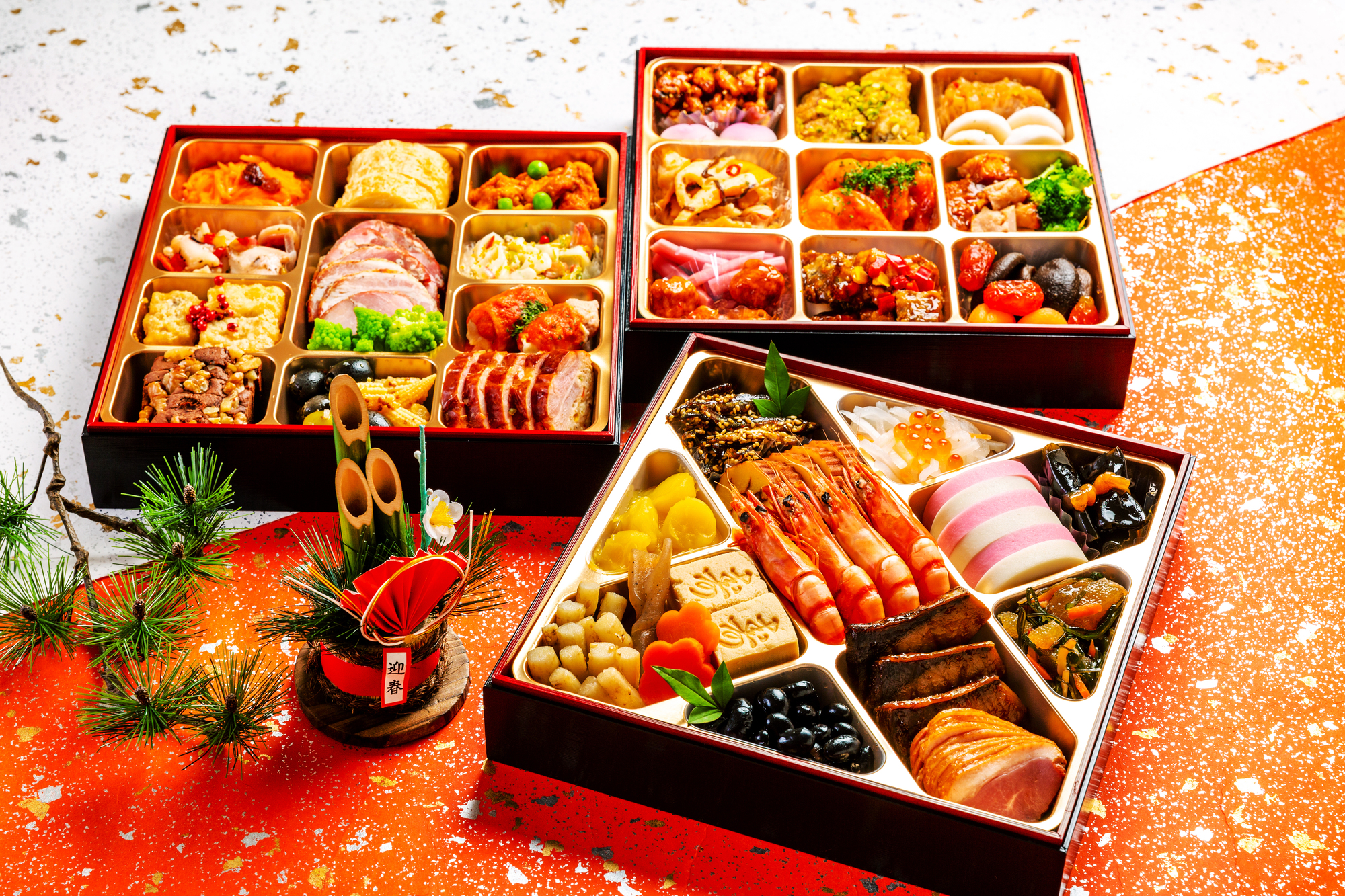
Osechi ryori is a traditional dish that is indispensable for the New Year. Originally called "osechiku," it referred to food offered to the gods on seasonal festivals. However, the term "osechi ryori" came to be used specifically to refer to food served on New Year's Day, the most important seasonal festival of the year
Each ingredient used in osechi ryori is imbued with auspicious meanings. Black beans represent "mame (hard work) and mame (health)," herring roe represents "prosperous descendants," rice crackers represent "bountiful harvests," and konbumaki represents "joy," all of which are puns that express hopes for happiness in the new year
Key points for choosing modern osechi dishes
Recently, a variety of osechi dishes have appeared, including not only traditional Japanese-style osechi but also Western and Chinese-style osechi, and fusion dishes that combine Japanese, Western, and Chinese elements. Being able to choose according to the tastes and number of family members is a way to enjoy osechi dishes that is unique to the modern era
When choosing an osechi, the key points to consider are the number of people, the number of items, and how to store it. The advantage of osechi that arrives refrigerated is that it can be eaten immediately without the hassle of thawing. Also, the more items there are, the more variety of flavors you can enjoy
Introducing recommended New Year's dishes
Here are some osechi dishes that will add a touch of color to your New Year's celebrations. Each has its own unique characteristics, so choose one that suits the number of people in your family and your preferences
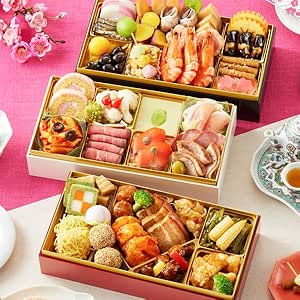
Japanese, Western and Chinese New Year dishes for 3-4 people
This three-tiered New Year's feast includes three different flavors: Japanese, Western, and Chinese. It has a rich selection of 50 items. It arrives refrigerated, so you can eat it right away without the hassle of thawing
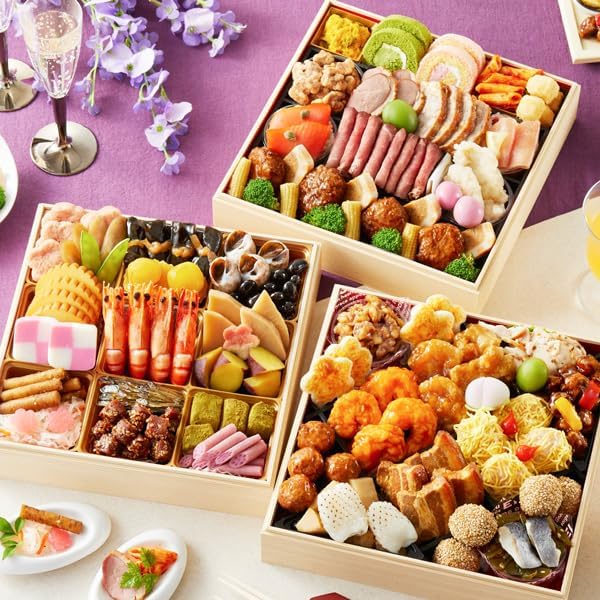
Extra-large New Year's meal for 4-5 people
This large-capacity osechi set is perfect for New Year's gatherings with relatives or for inviting guests. It comes in an extra-large 8-inch (approx. 10.5cm) box and contains 58 items, making it a truly spectacular meal. With a wide variety of dishes, from traditional Japanese to Western and Chinese, it's perfect for people of all ages
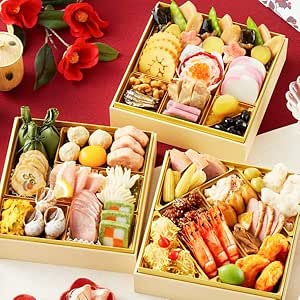
A Japanese-Western fusion New Year's feast for 3-4 people
This is a Japanese-Western fusion New Year's feast, luxuriously packed with 45 items in a handy 6-inch tiered box. It has a good balance of traditional ingredients and modernly arranged dishes, making it enjoyable for people of all ages. It is compact yet has a large number of items, allowing you to enjoy a variety of flavors
summary
By incorporating a few old-fashioned customs and making it a special occasion, I'm sure you'll be able to start the New Year in a different and heartwarming way than usual
Enjoy the start of the new year with your family and delicious New Year's dishes

Related Articles
Spring Udo charm and how to enjoy it: Introducing the seasonal Udo and Mountain Udo
Learn about rapeseed flowers, a vegetable that represents spring in Japan! We also introduce recipes that will make them even more accessible and enjoyable!
Warm your heart in the cold winter! Introducing Italian-style pot-au-feu
Introducing oyster dishes you'll want to eat during the cold winter!
Make Christmas even more special! Introducing how to make a cute, special "bush de noel"