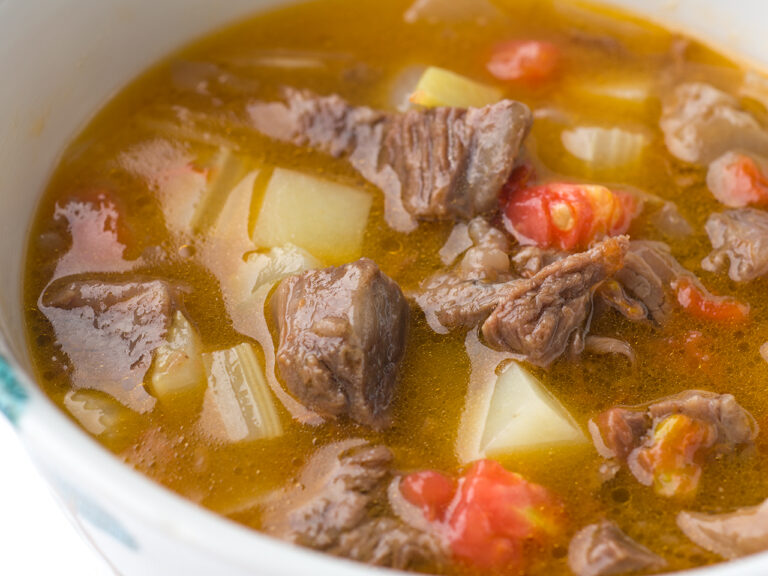
Enjoy the spring delicacy, broad beans, to the fullest! From how to choose the freshest ones, to preparation, cooking methods, and stylish recipe ideas
As spring arrives, broad beans, with their vibrant green pods, appear in stores. Many people may simply boil them in salt water every year, but broad beans are actually an ingredient whose flavor and texture can be greatly enhanced with just a few simple tips. This time, based on a column by a registered dietitian, we will introduce everything from the basics of broad beans to tips on preparation, various ways to eat them, and even some stylishアレンジ recipes
table of contents
- 1 What kind of bean is a broad bean? Origin of the name and varieties
- 2 How to choose delicious broad beans
- 3 Storage methods: Two ways to maintain freshness
- 4 Preparing broad beans: A little extra effort makes all the difference in taste
- 5 Various ways to eat broad beans
- 6 A spring-like arrangement! Broad bean crème brûlée
- 7 Items that are useful for enjoying broad beans
- 8 The short season is what makes broad beans so appealing
- 9 Introducing special recipes from EpiRecipe!
What kind of bean is a broad bean? Origin of the name and varieties
The name "soramame" (broad bean) comes from the fact that the pods grow pointing upwards towards the sky. Strangely, as they ripen, they turn downwards, a sight that is also endearing. They are also sometimes written as "kaimame" (silkworm bean) because they are in season around the time silkworms spin their cocoons, and the shape of the pod resembles a cocoon
While there are various varieties both domestically and internationally, the one you'll mostly see in Japanese supermarkets and greengrocers is a variety called "Issun Soramame." These beans are large and satisfying to eat, and offer a delightful balance of sweetness and a fluffy texture
Its peak season is from late April to around June. Because its availability period is short, it's one of those ingredients you should actively incorporate into your diet while it's on the shelves
How to choose delicious broad beans
If you're buying something in season, you'll want to choose the freshest one possible, right? Please consider the following points
| Checkpoint | Characteristics of fresh broad beans |
|---|---|
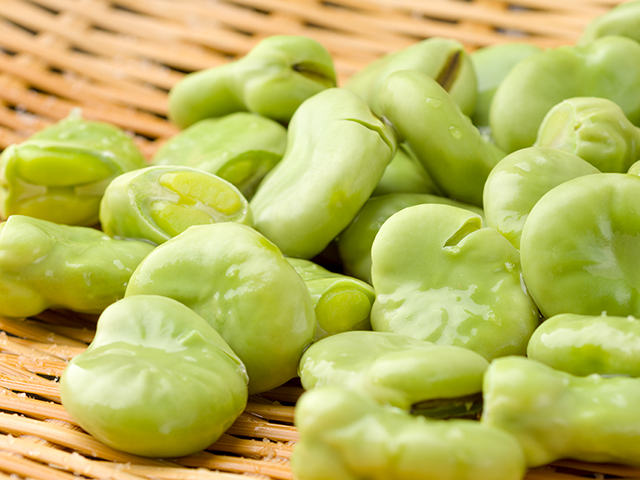
| Pod color | It is a deep green color, firm, and glossy |
| downy hair | The pods still have downy hairs on them |
| The pods are firm | Something that clearly shows the shape of a bean |
| Purchase method | I recommend the ones with the pods still attached |
Broad beans spoil very quickly. Since the flavor is lost when the beans are exposed to air, it's best to choose broad beans in their pods and remove them just before eating. Cook them as soon as possible after purchase
Storage methods: Two ways to maintain freshness
Store in the refrigerator
If you plan to eat them soon, place them in a storage bag with the pods still attached and put them in the vegetable compartment of your refrigerator. Since they lose freshness quickly, it's best to eat them within 2-3 days
frozen storage
If you buy in bulk or want to stock up while they're in season, freezing is a convenient option. Boil them briefly in salted water, then place them in a freezer bag and freeze; they can be stored for about a month. After thawing, they're suitable for use in stir-fries, soups, and other cooked dishes
Preparing broad beans: A little extra effort makes all the difference in taste
How to handle the pod
There are two methods for boiling peas: boiling them in their pods, or boiling them after removing the peas from the pods. Both methods will result in delicious peas, but each method requires specific preparation
Making incisions is the key point
It's important to make a small incision in the beans or pods before boiling them
- If boiling with the pod: Make a cut at both ends of the pod.
- If boiling after removing the beans: Make a cut on the opposite side of the black part (ohaguro) of the bean.
Doing this makes the beans cook more easily and allows the salt to penetrate deeper. Just this simple step makes a big difference in the final flavor
Tips for boiling in salt water
Adding salt when boiling broad beans isn't just for flavoring. It helps preserve the beans' vibrant green color, resulting in a more visually appealing dish. The boiling time isapproximately 2 minutes. Be careful not to overcook them, as they will lose their texture if they become too soft.
Various ways to eat broad beans
Classic boiled in salt water
The classic way to enjoy broad beans is simply boiling them in salted water and eating the tender, fluffy beans as they are. Whether you prefer to eat them with the thin skin on or peel them, enjoy them however you like. They pair perfectly with a cold beer and make a great accompaniment to a spring evening drink
Deep-fried and roasted broad beans
Grilling them in their pods or deep-frying the beans after removing them from the pods are also recommended. Grilled broad beans are steamed and cooked inside the pod, offering a different sweetness and aroma compared to boiled broad beans. Deep-fried broad beans have a crispy exterior and a fluffy interior, making them a delicious snack with just a sprinkle of salt
Mixed dishes and salads
Salads and side dishes using boiled broad beans are easy and recommended. Sesame dressing and tofu dressing make great side dishes for Japanese meals. Simply dressing them with olive oil and lemon creates a simple Western-style salad
Soup/Potage
Blending broad beans in a blender to make a potage brings out their gentle sweetness and smooth creaminess. Simply combining them with milk or cream makes a lovely spring dish. Making a batch during the season and freezing it is also a good idea
Stir-fry and broad bean rice
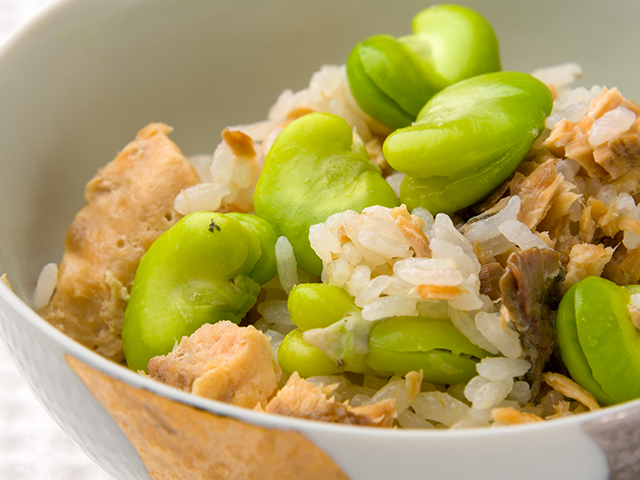
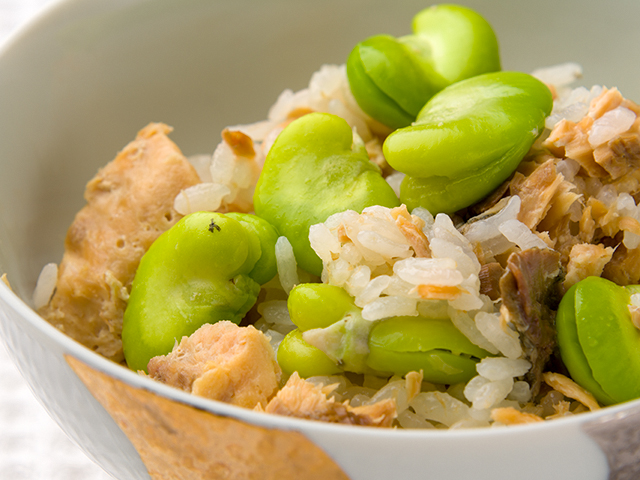
You can add boiled broad beans directly to stir-fries, or use them in mixed rice dishes or pilafs. Broad bean rice is a classic spring dish, and mixed rice with salted kelp is an easy and delicious option
A spring-like arrangement! Broad bean crème brûlée
Broad beans offer a completely different experience when used in desserts compared to boiling or stir-frying. Their subtle sweetness and ability to form a smooth puree make them ideal as a base for the traditional French dessert, crème brûlée. A delicate green cream emerges from beneath a crisp caramel layer, creating a delightful springtime treat
Ingredients (for 4 people)
Broad beans (frozen)... 100g Milk... 75ml Egg yolks... 1 and 1/2 Granulated sugar... 20g Heavy cream... 100ml Brown sugar or cassonade (for finishing)... appropriate amount
How to make it
1. Prepare the broad beans and preheat the oven. Boil the broad beans until tender, peel off the thin skin, and measure out 50g. Preheat the oven to 160°C.
2. To make the puree, blend the broad beans and milk in a blender until smooth.
3. Combine the batter . Transfer the puree to a bowl, add the egg yolks and granulated sugar, and mix well.
4. Add the heavy cream. In a separate saucepan, heat the heavy cream until just before boiling, then gradually add it to the bowl from step 3 while stirring.
5. Remove any bubbles from the surface of the batter to be baked in a water bath , and pour it into a heat-resistant shallow dish (approximately 60ml capacity). Place the shallow dish in a deep baking pan, pour in enough hot water to reach about half the depth of the dish, and bake in a 160°C oven for about 15 minutes.
6. To cool rapidly , gently shake the plate until the batter no longer moves, then remove it and cool it quickly by placing it in ice water.
7. For the final caramelization , sprinkle a thin layer of brown sugar or cassonade on the surface and caramelize it with a gas burner or a heated spoon. Chill thoroughly in the refrigerator and it's ready to serve.
Using cassonade (French brown sugar) for the finishing touch results in a richer sweetness and a more evenly dissolving texture, creating a more fragrant and crispy surface.
Items that are useful for enjoying broad beans
- Vacuum storage bag set: Useful for freezing broad beans purchased in bulk. By removing as much air as possible, you can preserve their fresh, seasonal flavor for longer.
- Hand blender (stick mixer): Very useful for making purees for soups and crème brûlée. It's easy to use even with small amounts of liquid, and the fact that there's less washing up is a great advantage.
- Kitchen torch (gas burner): An essential item for finishing crème brûlée. It allows for even caramelization, resulting in a significantly more beautiful finish.
- Ramekin (heat-resistant shallow dish) set: If you want to make a truly authentic crème brûlée, a dedicated shallow dish is very convenient. A size of around 60ml is easy to use and recommended.
- Cassonade (French brown sugar): This is a classic sugar for finishing crème brûlée. It melts evenly and caramelizes without unevenness, making it easy to create a crispy texture.
The short season is what makes broad beans so appealing
Broad beans are only available in stores for a short time each year. That's why, when you see them in season, be sure to pick some up. A simple dish of boiled broad beans with salt, or a more elaborate dessert, will add a rich touch to your spring table. Just remembering a few tips for preparing them will make them taste even better than usual. This spring, be sure to enjoy broad beans in a variety of ways
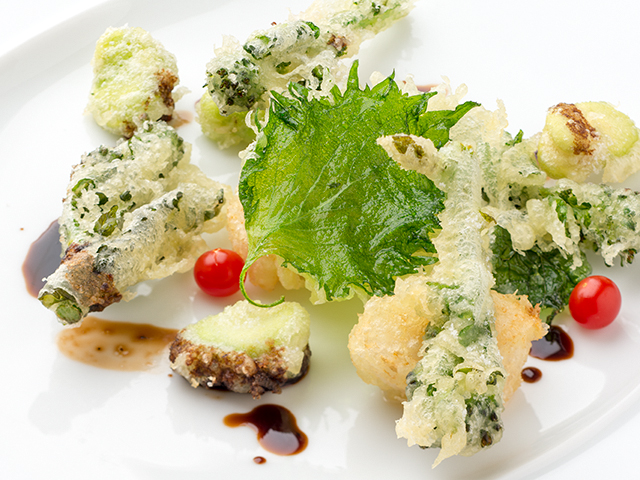
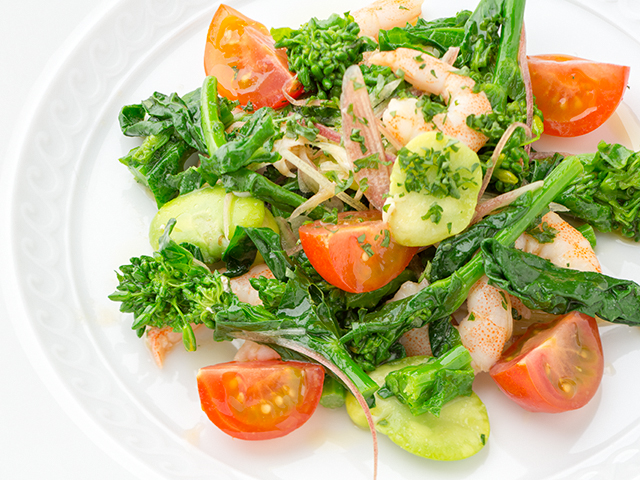
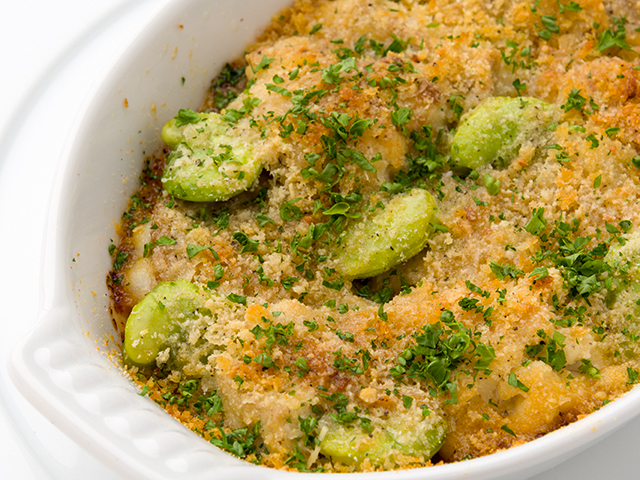
Introducing special recipes from EpiRecipe!


Related Articles
Learn about bamboo shoots, the food you'll want to eat when spring arrives! We'll also introduce some recommended recipes!

The appeal of sausages and recipes to use! A thorough explanation from the basics to arrangements
Daikon: A variety of vegetables essential to Japanese food culture
We'll introduce you to the characteristics of monkfish and some recommended recipes that make the most of its deliciousness!
The charm of sweet potatoes and their diverse uses